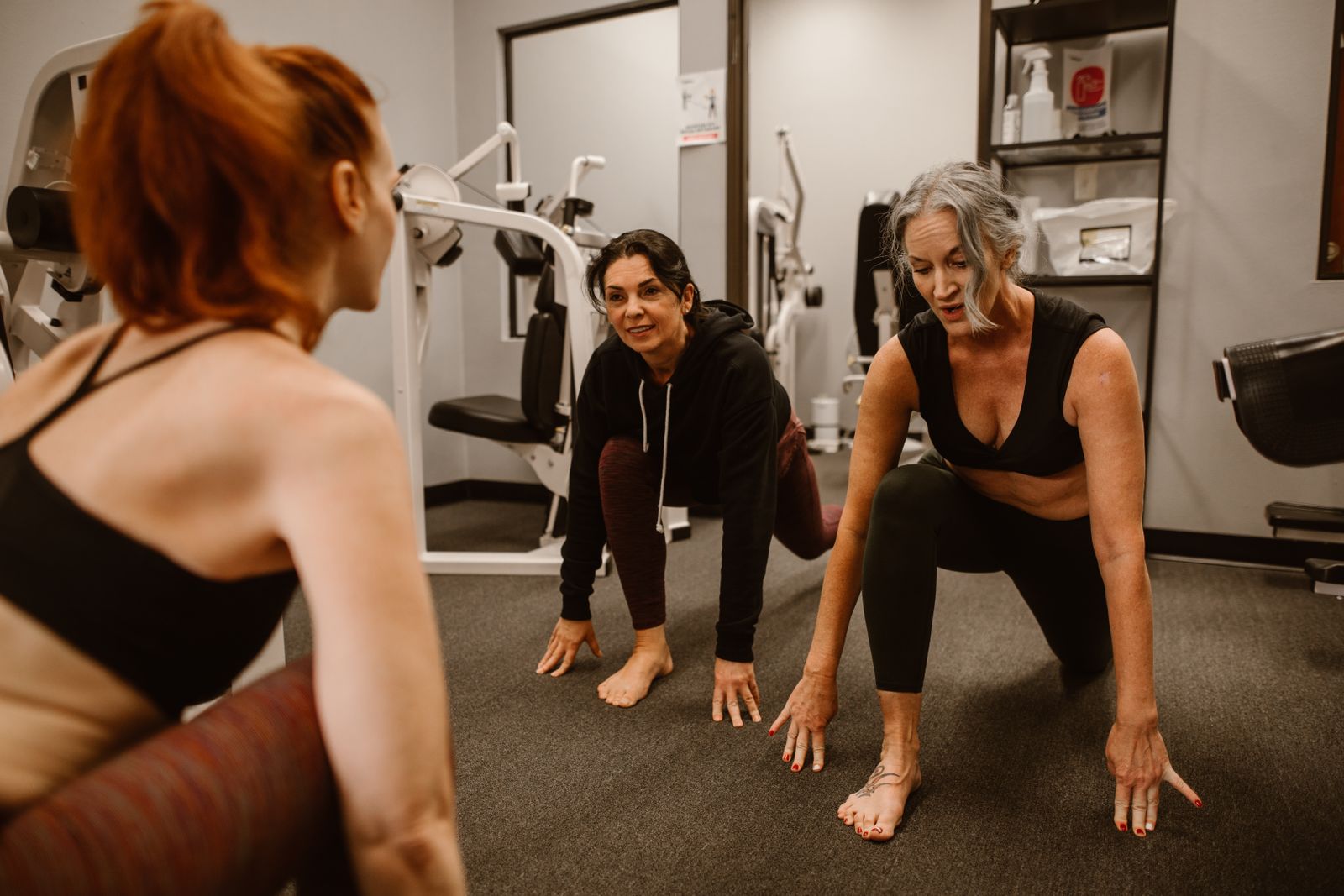

Friendshipisn't found.It's forged.
Train together. Become a crew.
8 people · 8 weeks · 16 coached sessions · Oakville · Burlington
Find your cohort →Scroll
Train together. Become a crew.
8 people · 8 weeks · 16 coached sessions · Oakville · Burlington
Find your cohort →
Walk in as strangers.
Walk out as a crew.
Friendship isn't built through proximity alone. It's built through consistency: showing up for the same thing, alongside the same people, over time. Shared effort accelerates trust. Accountability becomes care. Familiarity turns into belonging.
Forge is for adults who want more than surface-level interaction. People entering new chapters. People rebuilding themselves. People who are done waiting to stumble into a community and ready to build one.

The workout is the vehicle. The group is the point.
Small enough that it's difficult to stay anonymous.
The room doesn't reset every week.
An introduction isn't enough. Connection needs repetition.
Shared history needs time to accumulate.
Something to do together, instead of making socializing the task.
More contexts. More experiences. More shared stories.
The many ways we lose our people
Nobody wakes up lonely. Most adults arrive there slowly, through transitions modern life doesn't warn you about.
Your relationship ended. Your social circle changed with it.
Shared friendships shifted. Familiar routines disappeared. Weekends got quiet. You're ready for a circle that belongs to this next chapter, and to you.You have friends. You just don't have anyone to train with.
Your friends are great. They just don't want to lift weights twice a week. You're tired of working out alone and want people working toward the same thing.You know what to do. You just need people expecting you to show up.
Motivation comes and goes. A group that notices when you're missing doesn't. Same people, same time, twice a week, with a coach who knows your name.The kids built their own lives. Now it's time to build more of yours.
The house is quieter and your evenings are yours again. You love your kids. You also want friendships, plans and a routine of your own.You moved somewhere new. Your friendships didn't come with you.
New address, new grocery store, new commute. The people who know your story are hours away. Forge gives you a standing reason to see the same faces, twice a week.You still have friends. You just never seem to see them anymore.
Nobody did anything wrong. Life got busy, plans got cancelled, and every month got harder to line up. Forge puts connection on the calendar so it stops depending on everyone's schedule.You're raising a family. But who's in your corner?
You show up for everyone, every day. Forge is time that's yours, with people who are glad you showed up.You became a parent. Somewhere along the way, you lost your village.
Your days revolve around small humans and your calendar is full of their plans. Forge is a fixed time that's yours, with adults who are glad you came.You've done hard things with strangers. Imagine doing them with friends.
The finish line comes quickly. Finding people to keep showing up with is harder. Forge keeps the effort going with the same small group, week after week.You're connected all day. But when was the last time you felt connected?
Slack, Zoom, email, texts. Days can pass without a real conversation. Forge gets you out of the house and into a room with the same people, twice a week.The common thread
Whatever brought you here, you don't have to figure out the next chapter alone. Just show up. We'll bring the structure, the consistency, and seven other people who showed up too.
Find your cohort →The crew forms around the commitment.

Apply once. We place you in a cohort of eight based on your city and schedule.

Programmed strength training led by a Forge-certified facilitator, scaled to any fitness level.

Same room. Same faces. Twice a week for eight weeks. The repetition is the mechanism.

Sixteen sessions. Finish stronger, together. See what gets built.
An illustration of what repeated time together makes possible. Every group finds its own rhythm.

Every cohort is capped at eight. Here's what those eight weeks hold.
Pick your city, then apply for the next cohort or help bring one to you.
We've built a thousand ways | to meet someone.
We haven't built nearly enough | to make them stay.
The problem isn't you. It's the social design.

Built-in connection
Proximity and repetition did the heavy lifting.

Fragmented connection
Our paths no longer cross by default.

We didn't forget how to make friends. We lost many of the conditions that made friendship happen naturally.
We know friendship needs more than introductions. Forge puts the conditions for connection into practice: repeated proximity, shared effort, consistency, and time.
"Our epidemic of loneliness and isolation has been an underappreciated public health crisis."Advisory: Our Epidemic of Loneliness and Isolation
Who became friends came down, in large part, to who lived closest and whose paths crossed most often.
Festinger, Schachter & Back"A wish for friendship may arise quickly, but friendship does not."Book VIII
Tap any card to see the research behind it.
Friendship is a proximity game.
Familiarity begins with showing up again.
Tap to flipThe propinquity effect shows that people who cross paths regularly are more likely to form friendships. Repeated proximity creates opportunities for connection.
Research: Festinger et al., 1950Friendship is something you do.
The best relationships are built through shared life.
Tap to flipAristotle believed the deepest friendships grow through mutual goodwill, shared experiences and time. Friendship is cultivated, not simply discovered.
Source: Nicomachean Ethics, Books VIII–IX (philosophy)We never outgrow the need for connection.
Independence doesn't erase our need for dependable people.
Tap to flipAttachment research shows that close relationships can provide security throughout adulthood. We still need people we can count on.
Research: Bowlby; Hazan & Shaver, 1987Our nervous systems are social.
Connection isn't just emotional. It's physiological.
Tap to flipSupportive relationships can help us regulate stress and feel safer. Our bodies respond not only to our surroundings, but to the people beside us.
Research: Coan et al., 2006Move together. Feel closer.
Sometimes connection starts before conversation.
Tap to flipResearch suggests that moving in synchrony can increase cooperation and social bonding. Shared rhythm can create a sense of togetherness.
Research: Rennung & Göritz, 2016Do hard things. Find your people.
Shared challenges become shared stories.
Tap to flipStudies suggest that experiencing challenges together can strengthen cooperation and bonding. Working toward something together creates common ground.
Research: Bastian et al., 2014Familiarity changes everything.
The first hello is different from the sixteenth.
Tap to flipThe mere exposure effect shows that repeated exposure can increase liking. Familiarity can make social interaction feel easier, though repetition alone doesn't guarantee friendship.
Research: Zajonc, 1968We weren't built to do it all alone.
Support changes how we experience effort.
Tap to flipSocial Baseline Theory proposes that our brains expect access to supportive relationships. Trusted people can help reduce the perceived burden of life's challenges.
Research: Beckes & Coan, 2011From anonymous to expected.
Belonging begins when your presence matters.
Tap to flipMattering is the feeling that others notice, value and care about you. Being expected and missed can help transform a group into a community.
Research: Rosenberg & McCullough, 1981
Forge is the work of Sarah Larsen, a screenwriter, digital course builder and nervous system educator whose writing on psychology, brain health, attachment science and adult belonging has reached more than 13 million readers.
Her writing weaves science with storytelling, turning dense research into embodied understanding.
Forge is what happens when those ideas leave the page.
You don't need to be lonely to have a social life that's working against you.
Take the 90-second Connection Scorecard to see whether your life has the conditions real friendship needs — and where the gaps are.
Take the free scorecard →Your connection score
Your social life is missing some of the conditions that help friendship grow.
You see the same people regularly.
There's mutual effort for each other.
You've known each other long enough for trust to grow.
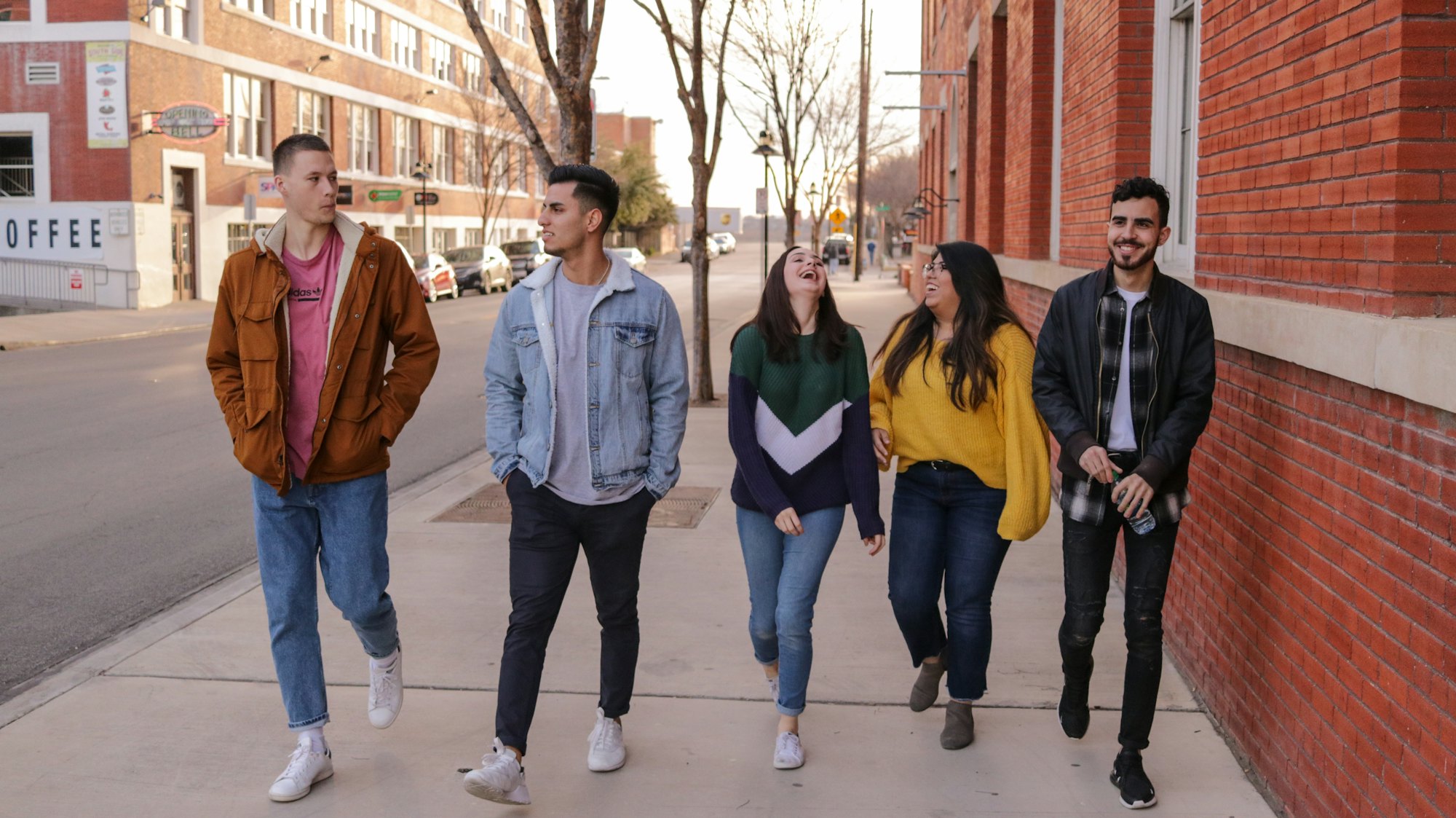
Honest writing on connection and community, plus first word when a cohort opens near you.
Women's cohort · 8 people · 8 weeks
November 2026 · Tue/Thu evenings
8 people · 8 weeks · twice a week